
Science, technology, engineering and mathematics – often abbreviated to STEM – might not be the first subjects that spring to mind when you think of early childhood education. But the building blocks of all learning are laid during these formative years, and early development through the neuroscience of play has a significant impact on future interests.
There are many wonderful ways that early childhood educators and caregivers can introduce big ideas to young minds. Not only are these fun, but they create the foundations for problem-solving skills, build curiosity and help prepare children for the transition to the more structured learning of primary school and beyond.
Examples of STEM in early childhood include activities like:
Building blocks
Yes, many an architect has had their interest piqued at a young age from this all-time favourite activity - making structures from building blocks. Some of the skills this helps hone include:
- Problem-solving: Why did that tower fall when another block was added?
- Fine motor skills: Handling and manipulating the blocks and putting them in place.
- Early mathematical skills: Learning about different sizes and shapes of blocks, as well as discovering how one shape can fit on or next to another.
Nature walks
Another timeless classic, every child adores discovering the natural world. All it takes is a little outdoor space, a magnifying glass, maybe a couple of bug jars and an identification chart. Biology, ecology, environmental science and more are at the root of this fun adventure, and who can fail to be charmed by the joy of a child finding a worm or bug to identify. Plus, freeing their finds after they’ve been evaluated also plays a role in encouraging empathy and understanding of all living things.
Magical magnets
This one definitely needs constant supervision, but playing with magnets and different materials to see what is attracted and what isn’t is a sure-fire way to captivate attention. It introduces the basic principles of magnetism and an understanding of different classifications of materials. You might encourage the child to predict whether they think a certain thing is magnetic or not before it’s brought close to the magnet, and then you can discuss the result.
Seeds and plant cultivation
This will, naturally, take place over the slightly longer term, but it introduces a realm of different scientific and natural world elements. Children get to plant, water and care for their seeds. Watching them germinate and grow into plants introduces a wealth of different aspects, such as lifecycles, a duty of care for living things and even subjects such as food and nutrition, should you choose to grow something that either the child or an animal can eventually eat.
Sink or float
Inquiry-based learning is a rather serious sounding title for something that is nothing short of transformational for young minds. Every child is born with an innate curiosity to find things out and explore what surrounds them. It’s this very reason that we have to incorporate so many safety elements in the home as soon as they begin to crawl. From opening cupboards to checking out the dog bed, discovering the intricacies of the world around them is an inherent desire.
This urge to find things out is exactly what we want to encourage in pre-schoolers. It’s one of the cornerstones of the Reggio Emilia approach, offering long-term benefits to shape lifelong learners.
Learning Through Play Sets Children Up for Success
Discovery and learning are always easier when it’s fun, whatever your age. However, for pre-schoolers, the right approach during this accelerated phase of brain development can influence their entire life. The neuroscience of play is well proven and understood, and inquiry-based learning drives the formation of crucial cranial connections that are the basis of many life skills, such as:
- Active learning.
- Problem solving.
- Critical thinking.
- Confidence and independence.
- Social skills and communication.
When activities are inquiry-based, children are encouraged to follow their natural curiosities. Perhaps that worm piques their interest, which leads to further exploration of soil and how this is where plants grow. In turn, this could lead to a planting project, with the wonderful journey of germinating their own seeds, right through to the joy of eating something that they grew themselves.
This is just a single example, but it demonstrates how following an initial interest can lead to other, more complex learning, all sparked from that first step of finding a worm.
The key to inquiry-based learning is that it’s personal. This isn’t about memorising facts, it’s about asking “why” and “how”, with the answers creating further questions that the child wants to ask. If we look at the list of life skills we mentioned above, we can demonstrate how such a method helps foster and grow these essential attributes:
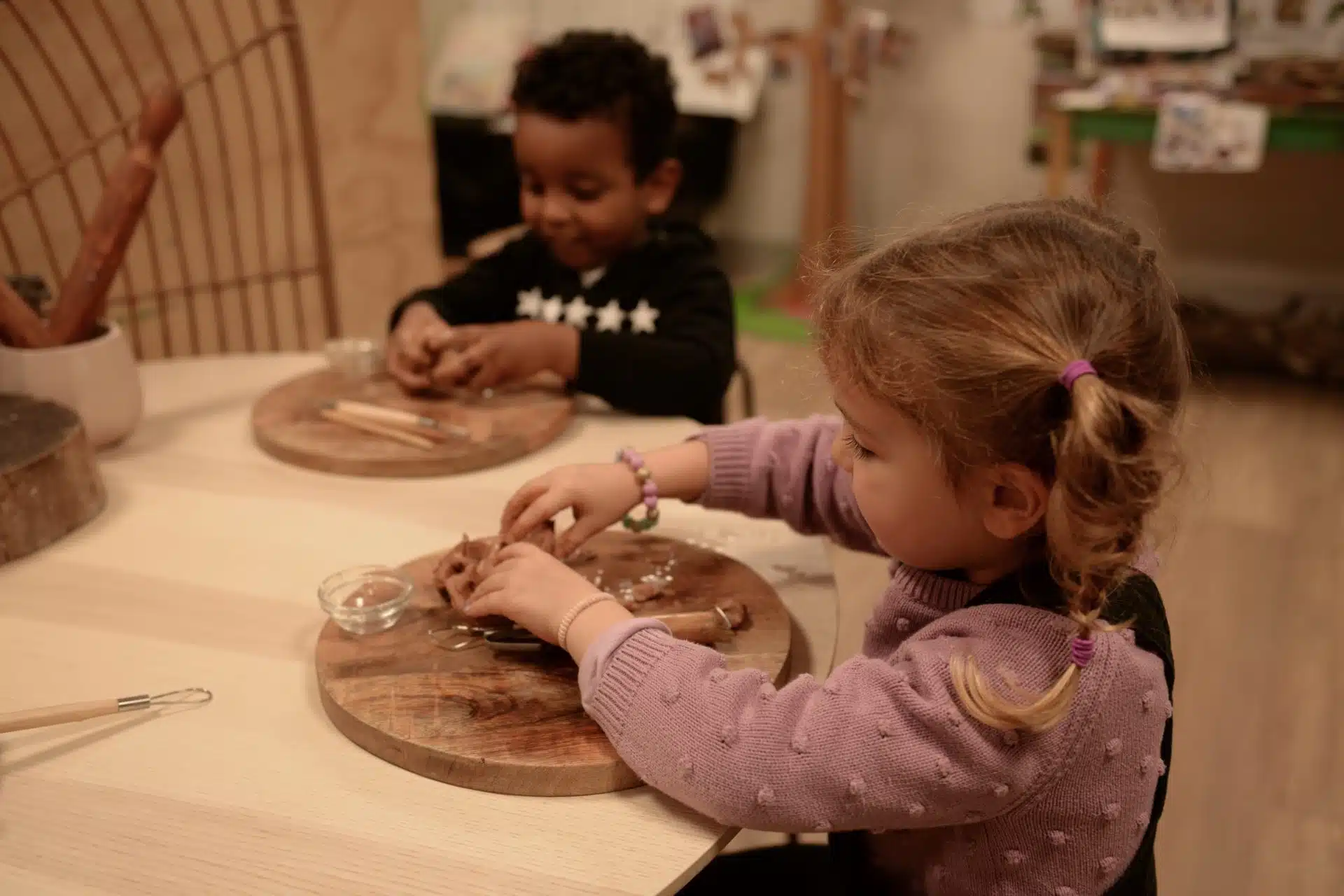
- Active learning: Getting hands-on, such as playing with sand, water, clay, different fabrics, etc, allows direct real-world interaction. Squishing, touching, folding, rolling… These actions promote movement, hone gross and fine motor skills, foster engagement, understanding and motivation, amongst other things.
- Problem solving: As theyfollow their interests,children learn to address challenges and work out how to overcome them, rather than being stopped in their tracks at the first sign of an obstacle.
- Critical thinking: Inquiry-based learning encourages ongoing questions. The answers to these give them the chance to contemplate which, in turn, provides the building blocks upon which analytical skills can grow.
- Confidence and independence: By leading the direction of learning, the child takes ownership of their activities, further promoting the confidence and independence that will stand them in great stead as they grow and navigate through life.
- Social skills and communication: Playing and joining in activities with their peers is exactly what a child needs to learn how to communicate, mingle and act with others.
A love of learning is truly a gift to give a child. Encouraging that incredible curiosity lies at the heart of the Reggio Emilia approach. Every time a child steps into an Evoke Early Learning space, they enter an environment where they’re actively encouraged to take (safe) risks, ask questions and allow their curiosity to roam in whatever direction they choose.
All our educators are well aware of the extremely privileged position they are in to be entrusted with the most important people in your life. No two days at Evoke are the same, with activities ranging from dance and dress-up to nature walks and story time. Indeed, no two terms are the same. Children might decide on a longer-term project to work on, perhaps something that the whole class can get involved in, with each child adding their own personal touch. Or a dance session might turn into the creation of a full-scale end-of-term production with all the parents and caregivers invited to watch the grand performance.
These are but two potential examples, because with inquiry-based learning, we act in a guiding role, meaning our classrooms are as individual as your child. We’d love for you to come and see us in action. Whether you’re interested in either our Albert Park or Clayton centres, we’re waiting to show you what a day at Evoke looks like.
Book a tour online and we look forward to welcoming you.

Tracey is a highly qualified educator and administrator and brings a strong combination of academic achievement, extensive work experience in the education and business sectors as well as drive and passion to her role as General Manager of Operations at Evoke Early Learning.
Tracey has a Master of Education and an Advanced Diploma of Business and holds VIT Dual Registration to teach in Early Childhood and Primary School settings. She’s also a VIT Trained Mentor Teacher and has worked in ECEC settings as a Director, Educational Leader and as a Victorian Senior Area manager. Her recognition as a state finalist in the recent Director of the Year Awards is testament to her achievements in the early education sector.
Her extensive work experience also included a stint as Head of Curriculum at the Royal Children’s Hospital Education Institute and positions as head of ICT at a number of large primary and secondary schools. Tracey is also experienced in not-for-profit sessional kindergarten settings and long daycare environments, so she has a deep understanding of what’s required to support the needs and expectations of young children, educators, parents and caregivers.
Tracey is responsible for operational management at Evoke Early Learning’s Clayton centre in Oakleigh East and their Albert Park centre in South Melbourne and is deeply committed to leading and driving effective and sustainable service delivery throughout the company.
Tracey is passionate about making a meaningful difference to young children, their parents and the wider community and under her expert guidance, Evoke Early Learning is continuing to raise the bar in quality early education and childcare.