
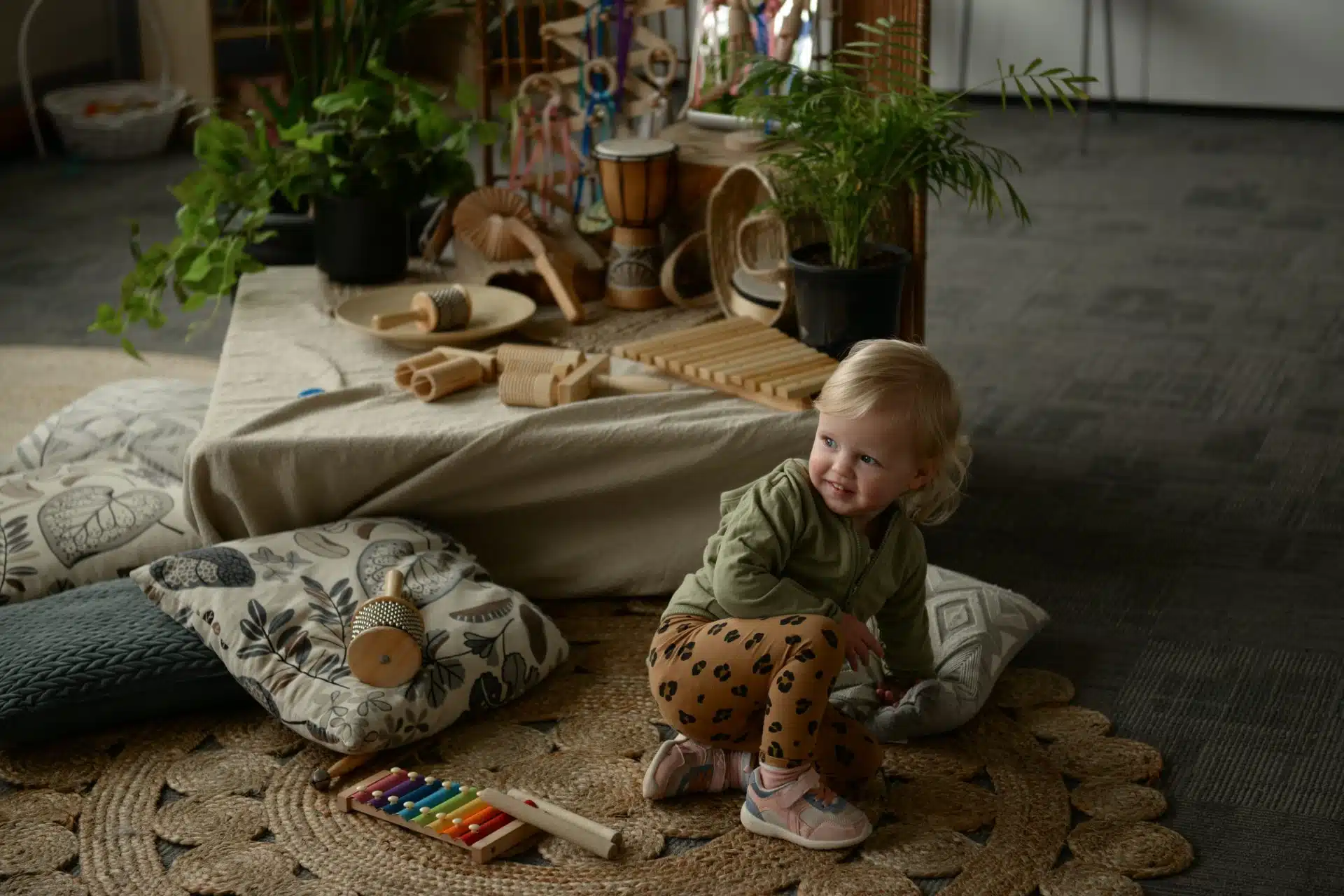
Emotions are tough for little ones to navigate. Let’s face it, they’re challenging for us as adults, even with all our prior life experience and reasoning to help us understand. For preschoolers whose brains are still developing and processing a massive amount of new information, emotional feelings and thoughts can often spill into the ‘too much to handle’ realm.
There’s a reason that the toddler years are often referred to as ‘The Terrible Twos’. From around 18 months and onwards for a year or two, many children go through periods of defiance, tantrums and behavioural shifts as they get to grips with all the changes happening within their brains.
This is not a case of the child being naughty. It’s simply a progressive element of cognitive growth and development as the brain continues to process information and create neural connections in response. The child begins to better understand their likes and dislikes but, very importantly, doesn’t yet have the communication skills to adequately voice and express themselves. It’s this mismatch that causes emotional outbursts and changing behaviours.
Parents, caregivers and early childhood educators are in a unique place to provide valuable assistance during these times. Mindfulness isn’t just for burnt-out execs or parents juggling child and work responsibilities, it’s for everyone at every age, including toddlers. A big part of fostering emotional resilience in preschoolers is helping guide them through the emotional roller coaster of understanding and coping with big feelings.
Calming Tools and Activities to Teach Vital Mindfulness Skills
Mindfulness is, without a doubt, a skill. The ability to zone out from the outside world and focus inwardly on the here and now is incredibly valuable. Whilst your toddler won’t understand the theory of calming techniques, what you will be giving them are the building blocks of a lifelong gift to help them manage their emotions and the ups and downs of everyday living.
A significant element of behaviour is down to learned techniques, and mindfulness is of immeasurable value. Some easy methods to help your child manage their emotions through calming practices include:
- Nature painting: The simple act of putting colour onto a natural object helps the child focus on the here and now. Items like leaves, rocks, sticks or anything natural that’s at hand are ideal. Indeed, painting and colouring in any form is a wonderfully mindful activity that allows the creative juices to flow and help children temper emotional outbursts.
- Emotion-colour pairing: The spectrum of emotions is broad, but talking about feelings and giving them a colour can be truly calming and helpful. Let your child think about how they feel and make their own decision about what colour this should be given. Pair this with using coloured crayons or pens to depict their feelings on paper is also a good idea, so they can mentally visualise the colour and physically see it at the same time.
- Breathing exercises: There are many names for different types of breathing exercises suitable for young children. All of them introduce the art of breath management, a very important element of emotional control. Teddy breathing, for example, involves lying on the floor with a teddy (or any favourite toy) on their chest. Get them to watch the teddy rise and fall as they breathe. Then they can try to make teddy stay still by holding their breath or make him go up and down faster, as they breathe more rapidly. Deep breaths make the teddy go higher and shallow ones mean he doesn’t move as much.
- Glitter jars: A DIY take on the snow globe, you and your child can add different shades of glitter to a jar of water. Screw the top on tightly and shake the jar. Then watch as the shiny colours dance, swirl and then gradually slow to stillness.
- Mindful nature walks: A gentle stroll in a quiet place where you and your child can listen for different sounds. From birdsong to critters rustling in the grass, the breeze gently swaying the leaves on the trees or the tinkling sound of water running over stones. You can even just sit quietly in the garden or the park and see what you can hear.
This list only scratches the surface of examples of mindfulness activities that can play a big part in helping children focus and calm big feelings. At Evoke Early Learning, we place a big focus on understanding temperament and the quirks that make all of our children the wonderful individuals they are.
Mindfulness activities are part and parcel of every Evoke day and a big element of our entire learning philosophy. Our early years program is dynamic, with our educators wholly invested in their own continuing professional development that fully aligns with the Early Years Learning Framework (EYLF).
Come and see our team in action by booking a tour at either our Clayton or Albert Park facility.

Tracey is a highly qualified educator and administrator and brings a strong combination of academic achievement, extensive work experience in the education and business sectors as well as drive and passion to her role as General Manager of Operations at Evoke Early Learning.
Tracey has a Master of Education and an Advanced Diploma of Business and holds VIT Dual Registration to teach in Early Childhood and Primary School settings. She’s also a VIT Trained Mentor Teacher and has worked in ECEC settings as a Director, Educational Leader and as a Victorian Senior Area manager. Her recognition as a state finalist in the recent Director of the Year Awards is testament to her achievements in the early education sector.
Her extensive work experience also included a stint as Head of Curriculum at the Royal Children’s Hospital Education Institute and positions as head of ICT at a number of large primary and secondary schools. Tracey is also experienced in not-for-profit sessional kindergarten settings and long daycare environments, so she has a deep understanding of what’s required to support the needs and expectations of young children, educators, parents and caregivers.
Tracey is responsible for operational management at Evoke Early Learning’s Clayton centre in Oakleigh East and their Albert Park centre in South Melbourne and is deeply committed to leading and driving effective and sustainable service delivery throughout the company.
Tracey is passionate about making a meaningful difference to young children, their parents and the wider community and under her expert guidance, Evoke Early Learning is continuing to raise the bar in quality early education and childcare.