Young minds are truly wonderful. Full of curiosity and open to exploration, which is exactly why provocation-based learning is so powerful. Rather than simply telling a child about, for example, a country, animal or custom, setting them up to question, investigate and find out things for themselves, driven by their own interests, is far more powerful.
Such ‘provocation’ is exactly what underlines the Reggio Emilia approach to early childhood education. Reggio learning spaces are carefully designed to encourage children’s natural urge to wonder, with a philosophy that every individual is an active participant in their own learning journey.
So… What Exactly is a Provocation?
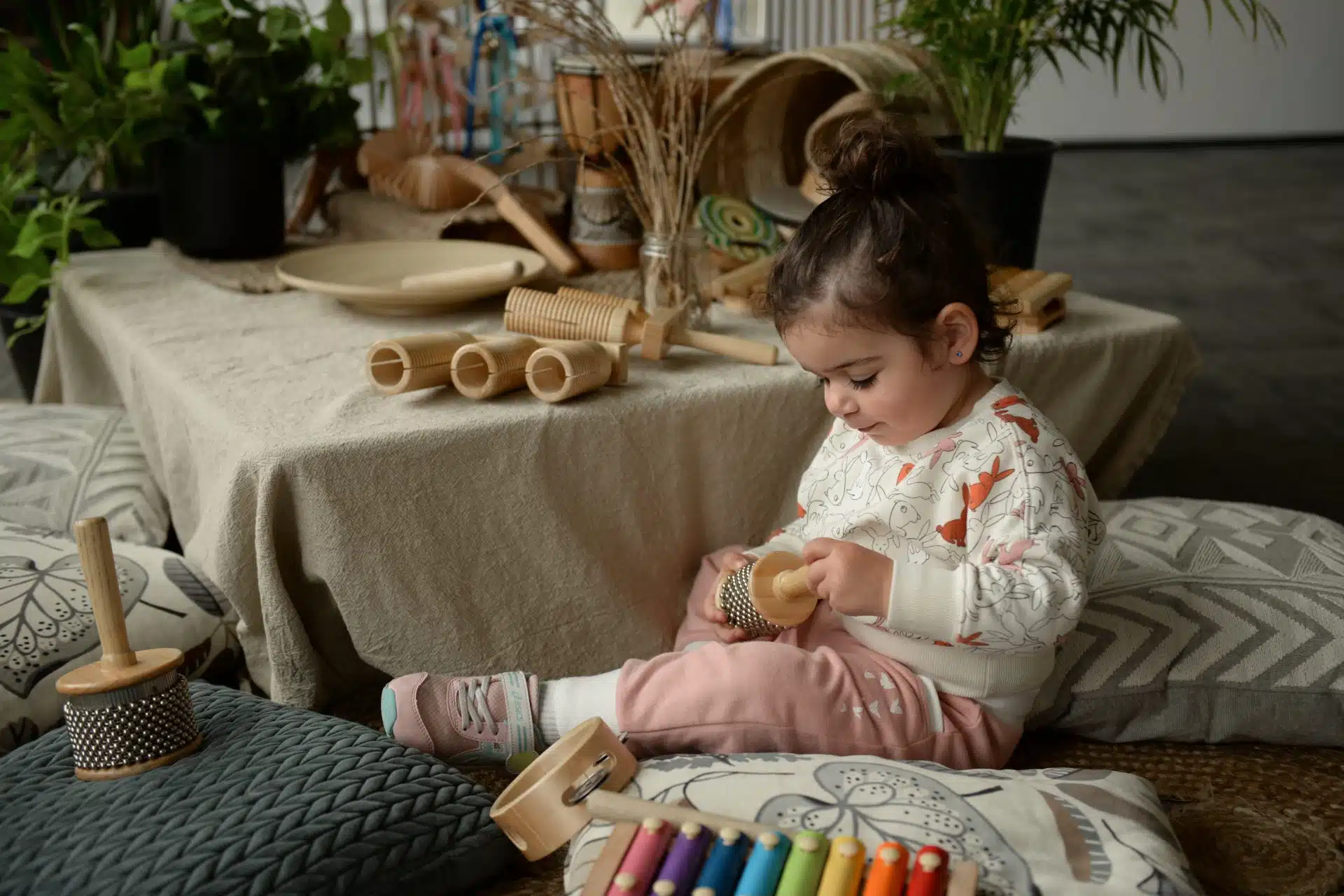
Quite simply, a provocation is an intentional invitation to explore. This could be as simple as a tray of autumn leaves, magnifying glasses and drawing tools placed near a sunny window. It could be a collection of recycled materials arranged beside photographs of bridges, prompting children to experiment with structure and design. It might even begin with a simple question, like “What do you think will happen if…?”
It’s less about what the stimulus is, and more about what and how it encourages exploration. Crucially, a provocation is open-ended, with no single correct answer, no model to copy and no pressure to produce a neat final product. Instead, the focus is on the process of discovery. Children observe, test ideas, revise their thinking and - one of the best parts of all - very often head off in directions adults didn’t predict. And it’s this element that’s often where the richest learning happens.
Why Provocations Matter
Provocation-based learning supports a wide range of developmental outcomes. But, perhaps even more importantly, it’s fun! Thoughtfully designed provocations encourage the development of key skills and help children achieve their learning targets – all while having a fabulous time as they learn.
They help children build:
- Curiosity and inquiry skills: by asking questions and seeking answers
- Problem-solving abilities: through experimentation, trial and error
- Language and communication skills: as they describe ideas and collaborate with others
- Creativity: by using materials in original and imaginative ways
- Confidence and agency: because their choices, ideas and theories are taken seriously
This plays wholly into one of the prime strategies of Reggio Emilia, ‘The hundred languages of children'. This is about the many ways children express their thinking and communicate to the outside world. Talking is only one method, with multiple other, often non-verbal, ways to express their inner feelings and thoughts. Examples include drawing, movement, sculpture, dramatic play, storytelling, construction and conversation.
A single provocation can unlock several of these languages at once. A basket of shells and clay, for example, might lead to counting, pattern-making, sculpture and storytelling about the ocean. And who knows where that surprisingly passionate discussion about hermit crabs came from….
The Role of the Environment
Another important Reggio Emilia philosophy is that ‘The environment as the third teacher’. This includes both the natural world around us and spaces that are intentionally designed to invite engagement, independence and reflection. Provocations work best when the environment is calm, aesthetically pleasing and rich in possibilities, which is typical of a Reggio classroom and also surprisingly easy to replicate at home.
Natural materials, loose parts, light, texture, mirrors, books and meaningful objects can all contribute to a sense of invitation. Presentation matters too. A few carefully arranged natural items are often more compelling than an overcrowded table full of plastic bits and pieces. When materials are displayed with thought and care, children receive the message that exploration is valuable and that their ideas matter.
Let’s not forget outdoor environments too, as these are particularly fertile ground for provocations. Puddles, sticks, stones, insects and shifting shadows can prompt deep scientific and creative inquiry. Such areas encourage children to connect with nature through play and discovery, making plenty of outdoor experiences essential for early childhood development.
Educators Guide, rather than Direct
In provocation-based learning, educators don’t step back entirely, nor do they dominate the experience. Instead, they observe carefully, listen deeply and respond with intention. They might extend learning by adding a new material, documenting children’s ideas or posing thoughtful questions, such as:
- What do you notice?
- Hmmm, why d’you think that happened?
- Can we try this another way?
Questions like these not only encourage children to follow what interests them, but also allows educators to plan future provocations based on what genuinely captures children’s attention. In other words, the curriculum is responsive and dynamic, rather than being set in stone.
Bringing Wonder into Everyday Learning
The beauty of provocations is that they don’t require elaborate resources or Pinterest-level perfection. Often, the most engaging invitations come from ordinary objects presented in thoughtful ways. A mirror beside flowers can spark close observation. A ramp and a selection of balls can launch a full-scale investigation into speed, distance and gravity. Add a clipboard, and suddenly everyone is a scientist…
At Evoke Early Learning, our educators use provocations within a Reggio-Emilia-inspired framework. They nurture curiosity, resilience, collaboration and a lasting sense of wonder that the world is full of questions worth exploring. For young minds, not only is this exciting, but it lays the building blocks for a lifelong love of learning.
With programs aligned to the Early Years Learning Framework for nursery, toddler and kindergarten aged children, we’d love to invite you to come and see us in action.
Book a tour today. We can’t wait to meet you.

Tracey is a highly qualified educator and administrator and brings a strong combination of academic achievement, extensive work experience in the education and business sectors as well as drive and passion to her role as General Manager of Operations at Evoke Early Learning.
Tracey has a Master of Education and an Advanced Diploma of Business and holds VIT Dual Registration to teach in Early Childhood and Primary School settings. She’s also a VIT Trained Mentor Teacher and has worked in ECEC settings as a Director, Educational Leader and as a Victorian Senior Area manager. Her recognition as a state finalist in the recent Director of the Year Awards is testament to her achievements in the early education sector.
Her extensive work experience also included a stint as Head of Curriculum at the Royal Children’s Hospital Education Institute and positions as head of ICT at a number of large primary and secondary schools. Tracey is also experienced in not-for-profit sessional kindergarten settings and long daycare environments, so she has a deep understanding of what’s required to support the needs and expectations of young children, educators, parents and caregivers.
Tracey is responsible for operational management at Evoke Early Learning’s Clayton centre in Oakleigh East and their Albert Park centre in South Melbourne and is deeply committed to leading and driving effective and sustainable service delivery throughout the company.
Tracey is passionate about making a meaningful difference to young children, their parents and the wider community and under her expert guidance, Evoke Early Learning is continuing to raise the bar in quality early education and childcare.