
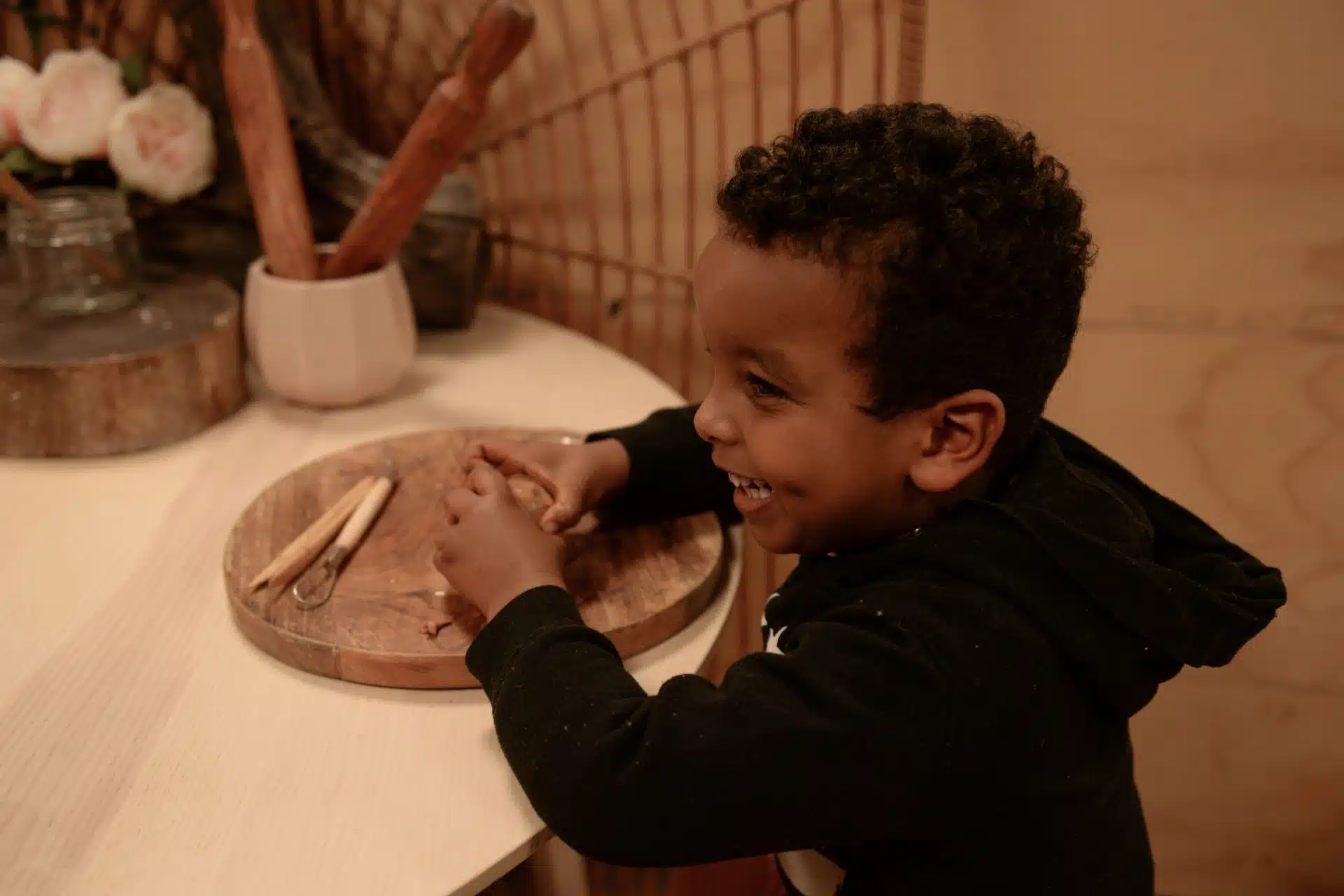
Has boredom become a dirty word? In today’s high-speed world with entertainment on-tap, parents might view the phrase, “I’m bored”, as a cue to instantly find something to fill the void.
However, before you hand over your tablet or rush to jump in with something fun to do, consider this…
Boredom is not the enemy. Conversely, developmental psychology and the principles of early childhood education show that it’s an essential catalyst for some of the most critical cognitive and emotional milestones in your child’s development.
The Cognitive Reset
When we constantly provide digital entertainment or adult-directed tasks, we’re essentially outsourcing imagination. When a screen tells a child exactly what to see, hear and feel, the brain moves into a passive, receptive state.
Boredom, by contrast, forces the brain to initiate. When external stimuli are removed, the child must look inward. They have to scan their own interests, memories and curiosities to decide what to do next. And it’s when this occurs that the magic happens. It’s the moment the child switches from being a consumer of entertainment to a creator of their own reality.
Building Resilience Through Stillness
One of the most important lessons a child can learn is that they’re capable of navigating their own internal states. If a child never experiences boredom, they never learn what’s necessary to overcome it. This can lead to a dependence on external fixes to regulate their mood.
Children learn resilience from having nothing to do. And it’s something that children are, given the chance, incredibly good at. By allowing them to solve the ‘problem’ of boredom, they learn to utilise their internal resources, which helps build a robust sense of self-efficacy and the confidence to realise that they don’t need an adult or a device to make life interesting. Instead, they can do it all by themselves.
The Place Where Imagination Starts
It’s no coincidence that the most creative thinkers, artists and innovators often cite daydreaming (AKA, boredom) as the source of their best ideas. When the mind isn’t directed by external input, it has the chance to wander…. It makes strange connections... It asks, “What if?”...
This is one of the marvels that early childhood educators regularly see in action. For example, a child might stand at the edge of the sandbox for five minutes doing absolutely nothing. This can, for adults who are constantly rushing from task to task and juggling multiple life necessities, look like time wasted. But, in reality, that child might be observing the flow of the sand, watching a beetle crawl over a leaf or constructing an elaborate backstory for a toy dinosaur in their head.
When they finally dive into the sand, the play that follows is deeper, more complex and more personal because it was born from their own observation, rather than a prompt from an adult.
The Role of Loose Parts
Early learning environments, such as the Reggio Emilia Approach, have many simple, open-ended materials – ‘loose parts’ – available for children to use as they choose. Natural materials, like stones, sticks, ribbons, cardboard boxes…. These are perfect for the bored child because they have no ‘right’ way to be used. A stick can be a wand, a thermometer, a fishing pole, a structural beam… When you pair a bored child with loose parts, you provide the ingredients for recipes that let the imagination to run wild.
Embracing the boredom gap, rather than filling their daily schedule entirely, is key. With just a few gentle shifts, parents and caregivers can integrate simple strategies into everyday life that encourage little ones to discover the wonders of their internal mechanisms.
Things like:
- When your child says the dreaded words, “I’m bored”, rather than jumping in with something to do, reply with something like, “Well, I wonder what you’ll come up with to do then”.
- Curate their entertainment, rather than making actual suggestions. This is easily done by providing the materials, like some blocks, craft paper or simply some kitchen pots and pans within easy reach. Then stand back and see what happens.
- Lead by example. Children learn by watching, so if they see you constantly reach for your phone every time you have a minute, they’ll mimic that behaviour. Instead, let them see you reading, staring out the window or engaging in a hobby.
At Evoke Early Learning, our early childhood educators are highly skilled in the co-learner role. Indeed, guiding and watching the children discover their own interests is something that gives our staff that warm fuzzy feeling. Our childcare philosophy is firmly based around each child being powerful, capable and full of curiosity, something that never fails to delight us each and every day.
If you’re looking for an early learning environment for your child in either Albert Park or Clayton, check out our enrolment policy for the next steps.

Tracey is a highly qualified educator and administrator and brings a strong combination of academic achievement, extensive work experience in the education and business sectors as well as drive and passion to her role as General Manager of Operations at Evoke Early Learning.
Tracey has a Master of Education and an Advanced Diploma of Business and holds VIT Dual Registration to teach in Early Childhood and Primary School settings. She’s also a VIT Trained Mentor Teacher and has worked in ECEC settings as a Director, Educational Leader and as a Victorian Senior Area manager. Her recognition as a state finalist in the recent Director of the Year Awards is testament to her achievements in the early education sector.
Her extensive work experience also included a stint as Head of Curriculum at the Royal Children’s Hospital Education Institute and positions as head of ICT at a number of large primary and secondary schools. Tracey is also experienced in not-for-profit sessional kindergarten settings and long daycare environments, so she has a deep understanding of what’s required to support the needs and expectations of young children, educators, parents and caregivers.
Tracey is responsible for operational management at Evoke Early Learning’s Clayton centre in Oakleigh East and their Albert Park centre in South Melbourne and is deeply committed to leading and driving effective and sustainable service delivery throughout the company.
Tracey is passionate about making a meaningful difference to young children, their parents and the wider community and under her expert guidance, Evoke Early Learning is continuing to raise the bar in quality early education and childcare.