In our fast-paced, high-achievement world, it can be tempting to view childhood as a series of milestones to be met, classes to be attended and skills to be mastered. We often pack our little ones’ schedules with back-to-back activities, hoping to provide them with the best possible head start. However, when it comes to early years learning, the importance of having unstructured time each day can’t be over-emphasised.
What Does Unstructured Actually Mean?
Unstructured time doesn’t mean an absence of guidance. Rather, it means an absence of prescribed outcomes. It is a period where there’s no right way to use a block, no correct way to paint, and no teacher-led agenda to follow. It’s the time when the classroom or home environment - Third Teacher, as referred to by the Reggio Emilia approach - truly comes alive.
Unstructured time doesn’t mean nothing to do. It means having the opportunity to explore personal interests, follow curiosity and, very often, a road that leads to some very unexpected outcomes.
This could be as simple as sitting in the garden or out on a picnic with no fixed plan in place. In these kinds of scenarios, a child is free to do whatever they want. This could be marvelling at a butterfly, finding crunchy leaves to crumple in their hand, or asking questions about why the clouds are moving or why the sun feels warm. Mother Nature is a wonderful environment for unstructured play, with outdoor experiences playing a vital role in early childhood education.
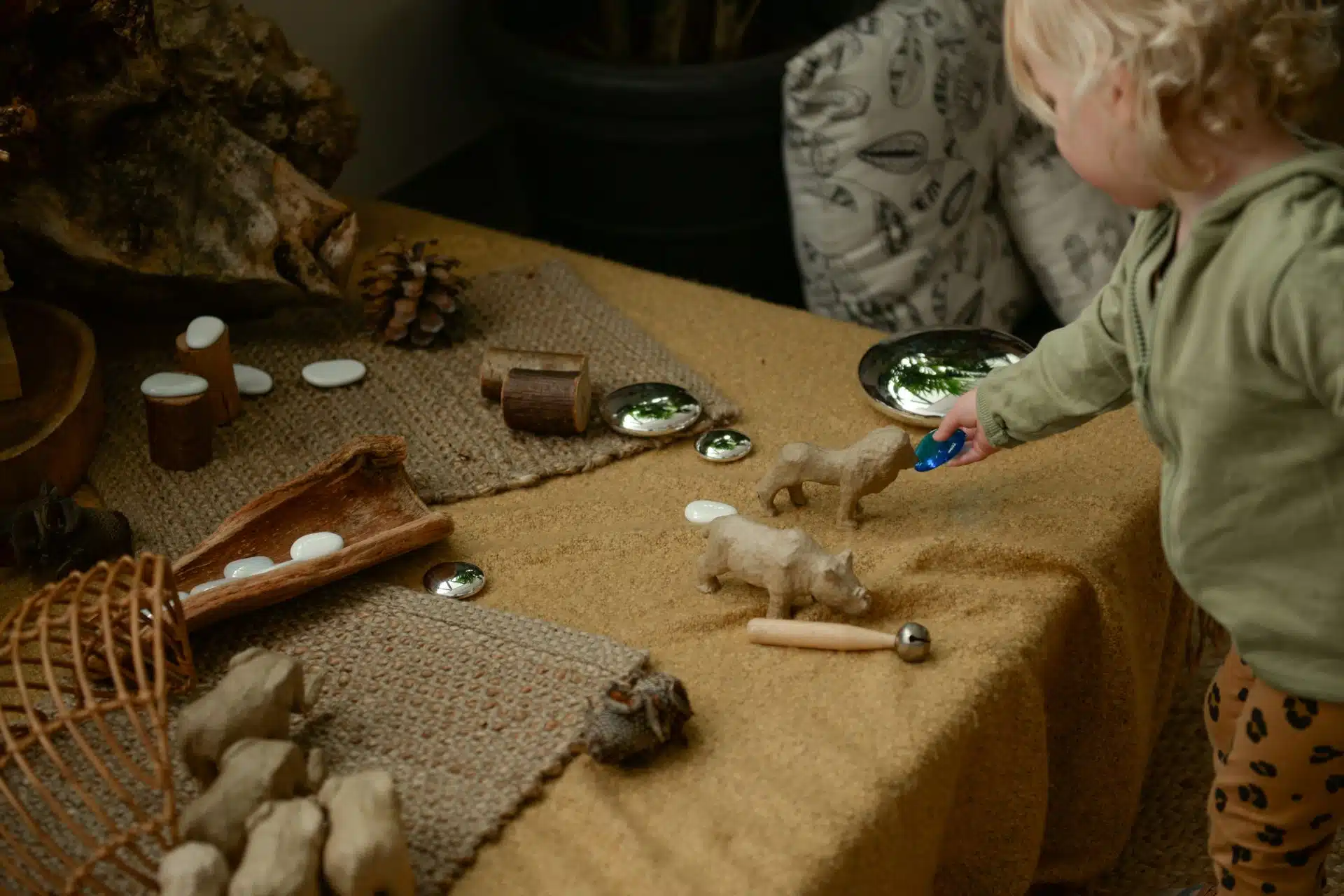
Similarly, unstructured inside time certainly doesn’t have to be in front of a screen or with a planned agenda. When allowed access to interesting materials, such as shells, fabric, or wooden tiles, a child will naturally reach out, touch and hold. Without a pre-designated pathway or structured ‘lesson’, the young brain will be undergoing multiple processes that are surprisingly complex, even if they don’t appear to be doing much.
Examples of these might be:
- Planning: "I want to build a bridge between these two chairs."
- Problem-solving: "The bridge keeps falling; I need more tape or a sturdier base."
- Emotional regulation: "My friend wants to use the chairs for a boat, not a bridge. How do we compromise?"
They’ll also be developing fine motor skills through manipulating the materials that they choose to play with, perhaps categorising as they movie objects into groups of similar sizes or colours, learning spatial awareness through movement and developing social skills through interacting with their peers.
Creating the Right Environment
While you probably don’t want your entire home to resemble a children’s playground, having a messy room or corner is for unstructured time and play is very important. Having a place filled with open-ended materials, like natural objects, recycled goods and things that can be used in multiple ways depending on the child’s current mission, is key.
Prepare to be amazed by the different ways that a child will choose to use them if left to their own devices. Those cardboard boxes might be a fort today but tomorrow become a boat to sail a stormy sea (with cushion waves to be navigated), and that silky piece of material may work just as well as an ice rink for a favourite toy as it does a headscarf when dressing up.
What is there doesn’t matter so much as the ability to have unfettered access and unstructured time to make up stories, role play, ask questions and figure things out.
Parents, caregivers and early childhood educators are there to create a balance between guidance and unstructured learning. Being an observer of child play, rather than a director, can be quite hard at first. A good way to approach this is to use an open questioning approach. For example, when your child comes home from a day of unstructured play, you might hear, "I just played with blocks today.” This is your cue to ask questions like,
- "How exciting. What were you building?"
- "Ooh, how did that work out?"
- “Nice. Did you do that on your own or with Jamie (or whatever their best friend is called)?”
Unstructured time is all about validating a child’s curiosity and giving them the space to follow their own desires. In turn, this plays a huge role in their development of a sense of self, confidence and a crucial can-do attitude that they can take forward as they grow and navigate life’s challenges.
At Evoke Early Learning, unstructured play is part and parcel of every day. Our early learning educators are an extension of the great work that parents and caregivers are already doing – we don’t just prepare them for school, we prepare them for life.
Our early learning curriculum is built around the Reggio Emilia approach, with a safe, caring environment for our nursery, toddler and kindergarten programs from both our Albert Park and Clayton centres.
Discover more about our enrolment process and book a t our today to see our team in action.

Tracey is a highly qualified educator and administrator and brings a strong combination of academic achievement, extensive work experience in the education and business sectors as well as drive and passion to her role as General Manager of Operations at Evoke Early Learning.
Tracey has a Master of Education and an Advanced Diploma of Business and holds VIT Dual Registration to teach in Early Childhood and Primary School settings. She’s also a VIT Trained Mentor Teacher and has worked in ECEC settings as a Director, Educational Leader and as a Victorian Senior Area manager. Her recognition as a state finalist in the recent Director of the Year Awards is testament to her achievements in the early education sector.
Her extensive work experience also included a stint as Head of Curriculum at the Royal Children’s Hospital Education Institute and positions as head of ICT at a number of large primary and secondary schools. Tracey is also experienced in not-for-profit sessional kindergarten settings and long daycare environments, so she has a deep understanding of what’s required to support the needs and expectations of young children, educators, parents and caregivers.
Tracey is responsible for operational management at Evoke Early Learning’s Clayton centre in Oakleigh East and their Albert Park centre in South Melbourne and is deeply committed to leading and driving effective and sustainable service delivery throughout the company.
Tracey is passionate about making a meaningful difference to young children, their parents and the wider community and under her expert guidance, Evoke Early Learning is continuing to raise the bar in quality early education and childcare.