
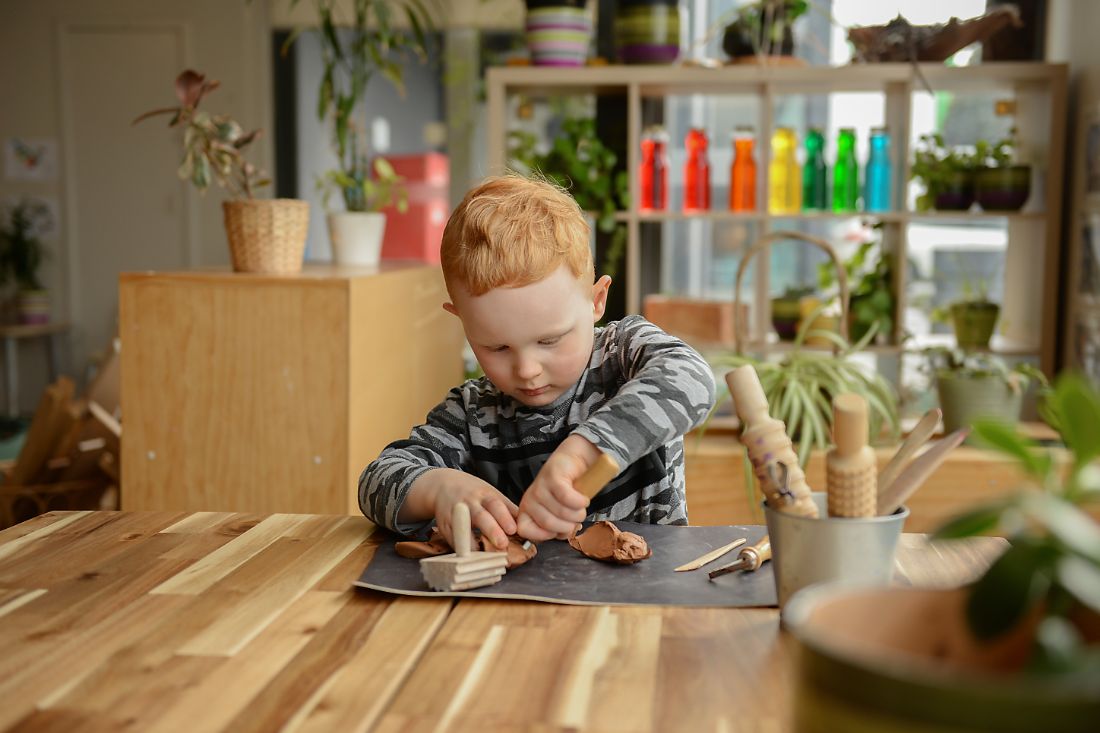
Every noticeable step in child development is a culmination of many, almost unnoticeable, smaller ones. Documentation allows us to see the bigger picture and how a child is evolving over time. From learning and honing independent problem-solving skills to the ongoing development of fine motor skills, recording learning provides educators, parents and caregivers with a wonderful overview of achievements and progression
But… Documentation in the Reggio Emilia approach isn’t simply a case of educators’ notes or spreadsheets. Instead, it’s interwoven into the entire learning model, meaning that it’s visible, accessible and something that everyone is a part of and, crucially, one that children are also directly involved in.
Celebrating Progress with Visual Achievements
One thing that’s immediately evident on entering any Reggio Emilia space is the many displays of what’s been happening in the classroom. Group projects of all shapes, sizes and subjects, but, crucially, there are also many other elements that provide a visual overview of the children’s journeys. These might be photos, transcripts of what the children have said, their pictures, drawings and more.
These documentation panels are a vital element of every child’s progress that’s carefully curated to provide everyone, parents, caregivers and children included, with a great overview of their early life journey.
It doesn’t stop there, however. Additional affirmation is provided by:
- Individual portfolios: Educators will capture images of each child’s work, including artwork, sculptures, writing and more, to create an ongoing timeline of their achievements. These portfolios might be in physical or, increasingly common, digital format. The latter offers the advantage of real-time sharing, allowing parents and caregivers to also upload examples of achievements noted when integrating Reggio aspects at home.
- Anecdotal records: Educators and families can capture specific achievements that document when a child hits a developmental or learning goal.
- Transcribed conversations: This is a specialised element generally performed by early childhood educators. Notes can be captured to understand the words a child uses when playing or working on a project, something that’s especially useful to understand how a child is thinking, working through challenges, their interests and more.
Visual Progression is Beneficial to All
Noting and following a child’s progression is, of course, part and parcel of an educator’s role. But it’s also hugely advantageous for families and the child themselves.
Parents and caregivers get to be involved in their child’s progression and, through access to their child’s portfolio, are kept firmly in the loop, understand their experiences and play a strategic part in their learning and development journey.
Educators have an ongoing visual window onto each child’s progression, giving them an overall snapshot of developmental growth, as well as any areas they might be struggling, which can be used to support and plan future planning.
Lastly, but equally as importantly, the child themselves gets to play a starring role in their own learning journey. Being able to see what they’ve achieved underlines one of the key principles of the Reggio Emilia approach: that every child is a capable learner and plays a central role in their own journey. Being able to visualise their own progress shows children that their ideas, feelings and interests matter.
Human nature is innately boosted by visual stimuli. For a young child, seeing their artwork on a wall or their model included in a classroom project, for example, stimulates positive neural growth that boosts self-worth, self-value and helps promote a healthy, can-do attitude.
Such visual documentation that includes educators, children and families is a hugely important aspect of the Reggio Emilia approach, and one that everyone is involved in at Evoke Early Learning.
Our childcare philosophy is built around each of the key concepts of the method, championing every child as being capable, powerful and full of curiosity. Our Albert Park and Clayton centres have been carefully designed to provide children with an environment and the tools they need to encourage these delightful traits. Of course, it goes without saying that our walls are festooned with the achievements of every child in our care.Book a tour to see us in action and our welcoming team will be happy to answer any questions you might have.
Book a tour to see us in action and our welcoming team will be happy to answer any questions you might have.

Tracey is a highly qualified educator and administrator and brings a strong combination of academic achievement, extensive work experience in the education and business sectors as well as drive and passion to her role as General Manager of Operations at Evoke Early Learning.
Tracey has a Master of Education and an Advanced Diploma of Business and holds VIT Dual Registration to teach in Early Childhood and Primary School settings. She’s also a VIT Trained Mentor Teacher and has worked in ECEC settings as a Director, Educational Leader and as a Victorian Senior Area manager. Her recognition as a state finalist in the recent Director of the Year Awards is testament to her achievements in the early education sector.
Her extensive work experience also included a stint as Head of Curriculum at the Royal Children’s Hospital Education Institute and positions as head of ICT at a number of large primary and secondary schools. Tracey is also experienced in not-for-profit sessional kindergarten settings and long daycare environments, so she has a deep understanding of what’s required to support the needs and expectations of young children, educators, parents and caregivers.
Tracey is responsible for operational management at Evoke Early Learning’s Clayton centre in Oakleigh East and their Albert Park centre in South Melbourne and is deeply committed to leading and driving effective and sustainable service delivery throughout the company.
Tracey is passionate about making a meaningful difference to young children, their parents and the wider community and under her expert guidance, Evoke Early Learning is continuing to raise the bar in quality early education and childcare.