
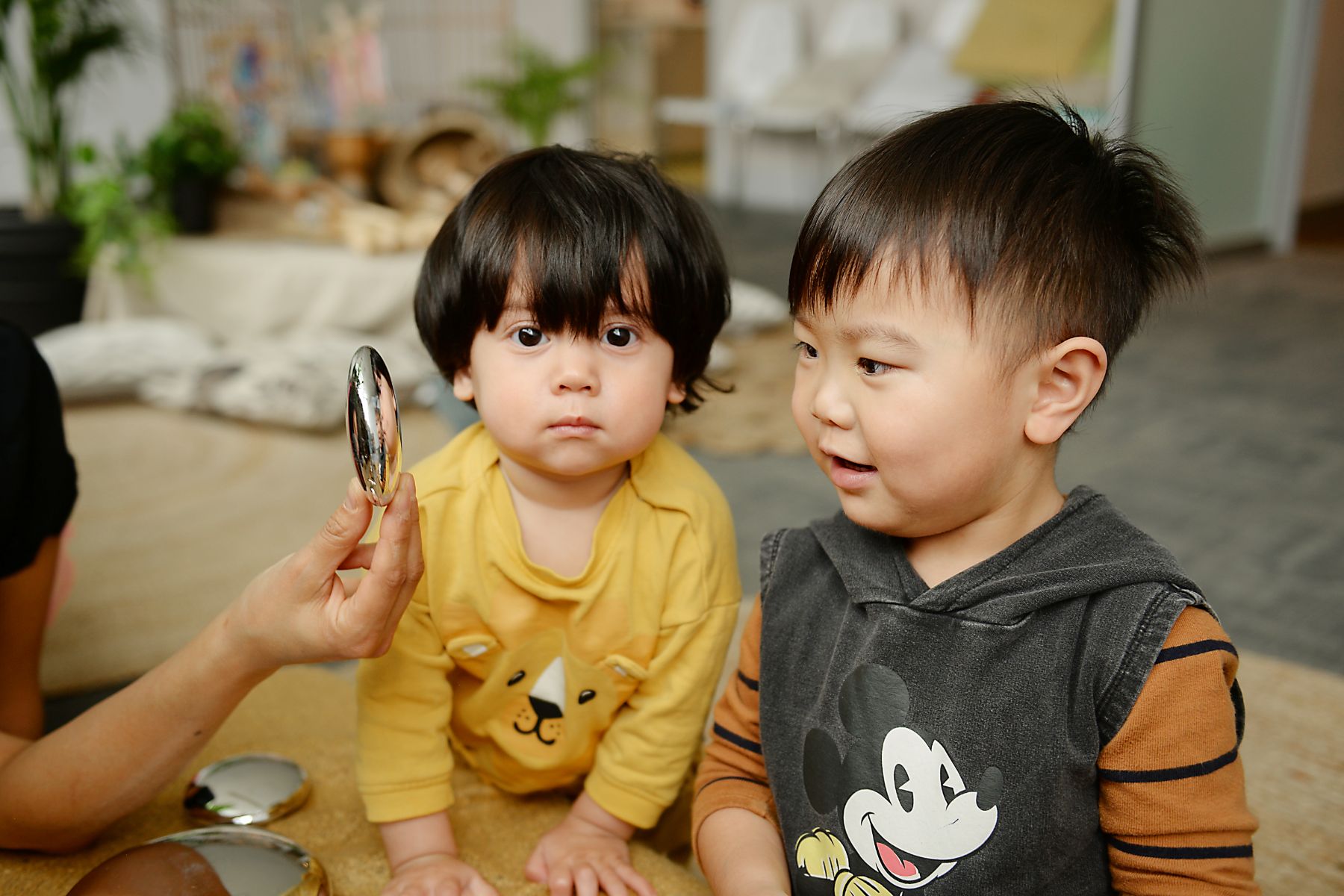
Most of us have cherished memories of favourite childhood stories. It’s common for children to want to hear their best-loved ones told over and over – and the reasons for this go far deeper than simply enjoying a good tale.
Storytelling has been used since the dawn of time to both entertain and instil deeper, important values and messages. Indeed, it’s a wonderful way to help build cultural awareness in early childhood, as well as introduce bigger life-skills and subjects in age-appropriate bite-sized chunks.
This makes it a powerful tool, and one that has massive potential to create solid building blocks for social skills, empathy and problem-solving abilities during the crucial formative years.
The Wonder of Words
Sharing story time with children is a sheer delight for everyone involved. Spinning a tale is an art and, done right, can captivate in a way that no computer, TV or phone screen can compete with. It also is a wonderful method of tapping into the 100 languages of children. By integrating additional aspects, like exaggerated expressions, movement, music, dance, etc, the art of the humble story morphs into an incredibly valuable tool that can encompass virtually any subject and expressive aspect you can imagine.
When you tell a story, both adults and children enter a world with endless possibilities, one that naturally introduces key learning concepts, such as increasing vocabulary, basic grammar, intonation, and even the building blocks of more advanced skills, like conflict resolution and problem solving,
More than a Language
Great stories aren’t just a string of words. They transport the listener, reader or orator to a completely different world. There’s nothing quite as magical as watching children become transfixed as they live a spoken adventure. Such moments far exceed the educational benefits of watching an iPad screen or a favourite television show. While such tools have their place, the potent draw of a well-spoken tale captivates in a way like no other.
A great story told well, with the use of tone, volume and a touch of the theatrical creates a landscape where children listen and form connections with the characters. These then serve as role models, introducing age-appropriate challenges and potential solutions that promote many different life skills.
Examples include:
- The art of communication: As children hear how their favourite (and not so favourite) characters communicate with others in the story, they benefit from these interactions. Listening to how they deal with challenges, get help from others, live and learn from both failure and success imparts strong messages. This knowledge translates to an understanding of real-world skills, such as conflict resolution and emotional expression, and all without a single ‘lesson’ in sight…
- Learning empathy: When a child becomes engrossed in a story, they don’t just hear the words, they mentally live them. They can identify with the characters, experience their emotions and feelings almost as if it were real. In a way, they are, as the child feels the interactions within their imagination. Research shows that story time can activate the same neural connections as real-life experiences, which is vital for the development of impressionable young brains.
- Learn perspective: Well-chosen children’s stories revolve around strong characters and relationships. These teach wonderful lessons about friendships, navigating difficulties and, very importantly, seeing things from a variety of perspectives.
Using stories to grow social skills is a potent educational tool that can easily be integrated into everyday life. From bedtime favourites to making up their own adventures or, that age-old tradition of sitting on an older person’s knee and listening to their life experiences, stories come in many different guises.
Whether it’s reading from a book, recounting tales from your own childhood or making up an entire world full of fabulous characters and their adventures, educators, parents and caregivers can upscale the fun and learning benefits through:
- Including interactions, such as animal noises, songs, acting parts, wearing costumes, using instruments and props… The choices are endless.
- Sharing family stories – they don’t all have to be fiction. Indeed, sharing experiences is hugely beneficial, fostering a sense of belonging and is a great way to strengthen multi-generational connections.
- Integrate technology into the mix. Mindful use can both enhance a story and help children navigate their first steps towards learning important tech skills.
At Evoke Early Learning, storytelling takes centre stage at pivotal points throughout the day. Stories fit into so many areas of early childhood education. From the classic book read to using an art project to showcase a tale or maybe using storytelling songs for dance and creative movement, never a day goes by without taking full advantage of a fictional world.
This applies to our nursery, toddler and kindergarten programmes, where the joy of stories are intertwined into our entire childcare philosophy.
Discover more about our enrolment process and come and see our talented early childhood educators in action.

Tracey is a highly qualified educator and administrator and brings a strong combination of academic achievement, extensive work experience in the education and business sectors as well as drive and passion to her role as General Manager of Operations at Evoke Early Learning.
Tracey has a Master of Education and an Advanced Diploma of Business and holds VIT Dual Registration to teach in Early Childhood and Primary School settings. She’s also a VIT Trained Mentor Teacher and has worked in ECEC settings as a Director, Educational Leader and as a Victorian Senior Area manager. Her recognition as a state finalist in the recent Director of the Year Awards is testament to her achievements in the early education sector.
Her extensive work experience also included a stint as Head of Curriculum at the Royal Children’s Hospital Education Institute and positions as head of ICT at a number of large primary and secondary schools. Tracey is also experienced in not-for-profit sessional kindergarten settings and long daycare environments, so she has a deep understanding of what’s required to support the needs and expectations of young children, educators, parents and caregivers.
Tracey is responsible for operational management at Evoke Early Learning’s Clayton centre in Oakleigh East and their Albert Park centre in South Melbourne and is deeply committed to leading and driving effective and sustainable service delivery throughout the company.
Tracey is passionate about making a meaningful difference to young children, their parents and the wider community and under her expert guidance, Evoke Early Learning is continuing to raise the bar in quality early education and childcare.