
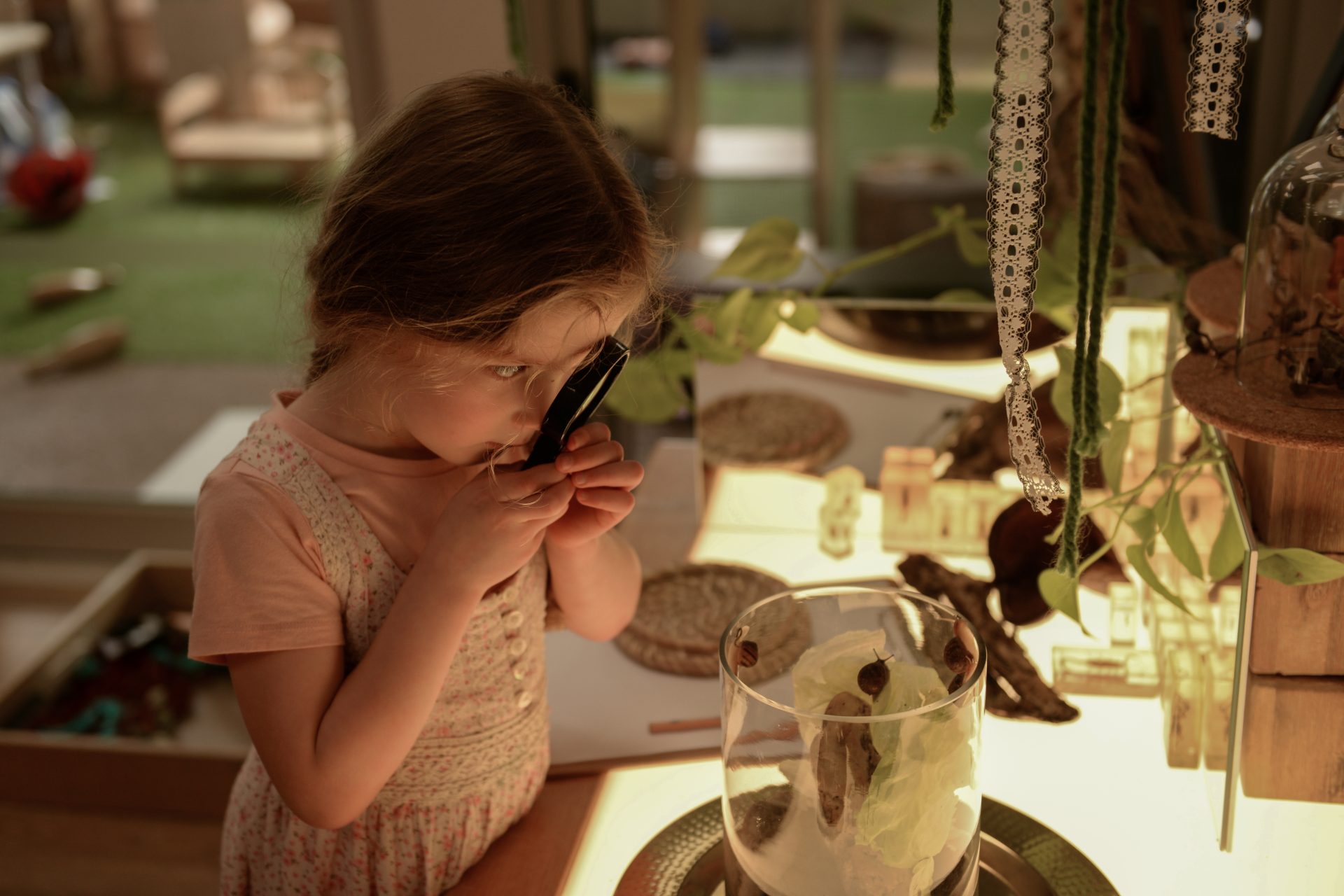
Early childhood educators, parents, caregivers and all family members, play a pivotal role in everything that shapes a child’s formative years. Whether it’s formal or informal education, guiding children without taking over is a critical skill that provides essential insight into a child’s development.
The Reggio Emilia approach champions this, with educators actively watching and listening to all the unique elements that make every child the wonderful human being they are. This allows for a tailored, bespoke approach where learning needs are identified, future guidance is planned and families can easily be integrated into the process.
Watch, Listen, Document
Careful observation of children as they play, learn and discover their environment should be an intentional and interactive process. Examples of how this translates to the real world include:
- Observing motivational cues: What activities spark a child’s interest? Perhaps they love stories about animals, are fascinated by different stones, or show incredible creativity with colour choices when drawing and painting. Understanding what motivates a child allows educators and caregivers to signpost subjects and areas that will naturally prompt the child to explore further.
- Listening to what they say: Purposely listening to the questions a child asks, what ideas and discoveries stimulate their attention and, vitally, areas that they might struggle more with, are key to understanding developmental stages and progress.
- Watching interactions: Learning social skills is vital and observing how children mingle with their peers provides an important window into personality and the art of communication.
- Taking note of their creations: The 100 languages of children, which is a key element of Reggio Emilia, is all about the many ways that a child can express themselves. This is apparent in so many ways, from a child’s drawings and paintings to the models they build and the shapes they might draw in the sand or mud.
- Noting a need for downtime: Some children naturally need more of this than others. While some might be happy with group activities most of the time, others require more periods of quietness and alone time.
By observing, listening and communicating with a child, educators gain enhanced understanding of every facet of their personality and development. This key information is then documented in a variety of ways, such as:
- Photos and videos: A digital diary of snapshots of child’s day-to-day activities in a Reggio Emilia classroom is a hugely valuable tool. Not only does it provide educators with an ongoing visual diary, but it can easily be shared for whole family involvement.
- Classroom displays: Where pictures and other creations are on view for all to see. This also brings the child into the mix, allowing them to see their efforts and progression, which allows them to play an active role in their own development.
- Anecdotal notes: Educators make physical notes in each individual child’s portfolio. This would highlight elements, such as reaching developmental goals, as well as helping for early recognition of areas where they might need additional support.
The Importance of Observation
Observing and listening are powerful tools that play a valuable role in identifying a child’s strengths and weaknesses. These active and intentional steps mean that a child is truly free to express themselves without any, even unintentional, outside direction from the adult.
It allows educators and families to better:
- Understand a child’s likes, dislikes and abilities
- Spot any additional learning requirements at the earliest opportunity
- Help plan future activities and learning strategies
- Tailor support for the best development and learning journey defined by their individual needs
In short, active observation and listening allow educators and caregivers to gain a better insight into how the child sees the world. With a better understanding of this, educators and parents can gain a far more beneficial overview of the ‘why’, rather than the ‘what’, which is really important for understanding elements, like behaviours and potential developmental challenges.
At Evoke Early Learning, observing our children’s wonderful personalities and learning journey is part and parcel of day-to-day life. The talented early childhood educators at both our Albert Park and Clayton Centres embrace a suite of multi-faceted observation techniques that naturally integrate with the Evoke philosophy.Book a tour today and come and see for yourself.
Book a tour today and come and see for yourself.

Tracey is a highly qualified educator and administrator and brings a strong combination of academic achievement, extensive work experience in the education and business sectors as well as drive and passion to her role as General Manager of Operations at Evoke Early Learning.
Tracey has a Master of Education and an Advanced Diploma of Business and holds VIT Dual Registration to teach in Early Childhood and Primary School settings. She’s also a VIT Trained Mentor Teacher and has worked in ECEC settings as a Director, Educational Leader and as a Victorian Senior Area manager. Her recognition as a state finalist in the recent Director of the Year Awards is testament to her achievements in the early education sector.
Her extensive work experience also included a stint as Head of Curriculum at the Royal Children’s Hospital Education Institute and positions as head of ICT at a number of large primary and secondary schools. Tracey is also experienced in not-for-profit sessional kindergarten settings and long daycare environments, so she has a deep understanding of what’s required to support the needs and expectations of young children, educators, parents and caregivers.
Tracey is responsible for operational management at Evoke Early Learning’s Clayton centre in Oakleigh East and their Albert Park centre in South Melbourne and is deeply committed to leading and driving effective and sustainable service delivery throughout the company.
Tracey is passionate about making a meaningful difference to young children, their parents and the wider community and under her expert guidance, Evoke Early Learning is continuing to raise the bar in quality early education and childcare.