Creativity comes in many forms, from painting to singing, role play to sand castles, the art of making something purely from the imagination is certainly fun. But even more importantly, such activities are exactly what’s needed for the brain to develop the basics of crucial life skills.
From problem solving to hand-eye coordination, exposure to creative arts plays an incredible role in equipping a child with a strong base upon which all their future abilities can grow, including:
- Critical thinking.
- Communication and social interactions.
- Problem solving.
- Emotional intelligence.
- Confidence and self-esteem.
These are all elements that we wish for our children to excel at. Creative arts of all kinds give children the chance to get hands-on, experiment, make discoveries (and mistakes) and stimulate the brain to form the crucial neural connections necessary for great all-round development.
Creative Arts and Physical Development
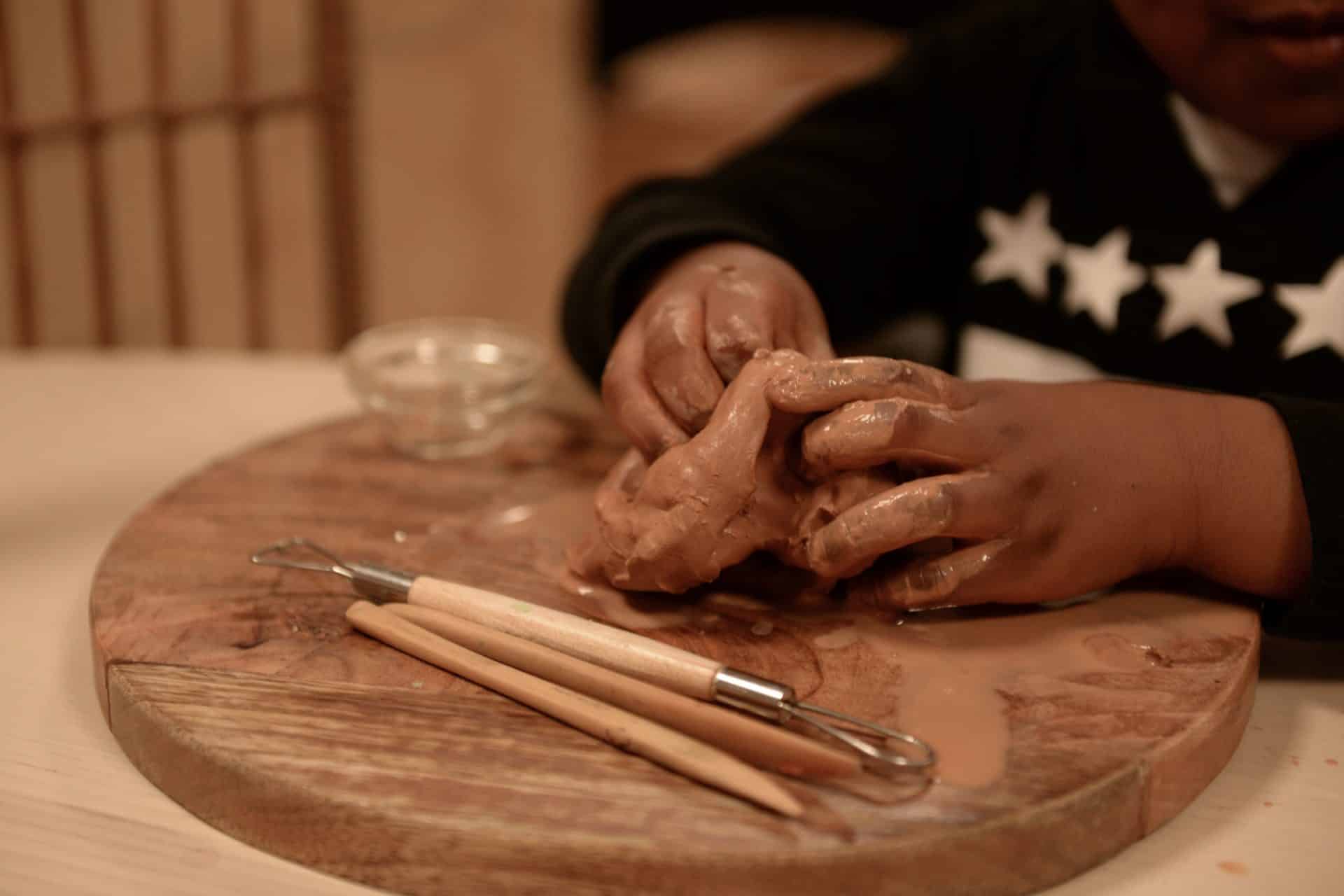
Movement and coordination are learned skills, and the more a child practices, the more proficient they become. Whether this is learning how to place building blocks to make a tower, use a crayon for colouring, dancing to music (a baby or toddler swaying to sounds also counts), finger painting, messy play or anything else, these activities are all helping the child discover and hone how their body works.
For instance:
- Dancing improves balance, body control, coordination and stimulates muscle development.
- Drawing helps with the development of fine motor skills, hand-eye coordination and strengthens muscles in the hands and arms.
- Messy play aids sensory development and dexterity,
Creative Arts and Emotional Development
Children express themselves in many ways. Creative arts, such as drawing, dancing, singing and acting, provide an outlet for emotions way before a child has developed the ability to articulate them. Leading early childhood methods, such as the Reggio Emilia Approach, talk about the ‘hundred languages of children’, which is a wonderful description of the many different types of non-verbal communication that support emotional development. For example:
- Painting and drawing are a leading way for children to express feelings. The use of colour is a prime example, as are the shapes, images and subjects they choose to depict.
- Dancing and role-playing provide an outlet for physical emotion.
- Telling stories encourages exploration of their own narrative. When this is done in a group scenario, it also fosters collaboration, promoting awareness and understanding of the feelings and opinions of others and helping those crucial emotional neural connections to form.
Creative Arts and Social Development
Interacting with others during creative play promotes sharing and communicating, as well as helping to create collaborative learners. Discovering the intricacies of social interaction plays a significant role in building confidence, which goes hand-in-hand with future skillsets that will provide the solid base to help them navigate successfully through school, college and into the workplace.
- Collaborative art projects are a great way of developing stronger social connections, learning how to share ideas and work as a team.
- Role playing allows children to act out social situations, their feelings and appropriate responses to hypothetical scenarios.
- Working with others on a project helps children learn to collaborate, work out problems together and discover that there is often more than one way to approach and solve challenges.
Creative Arts and Intellectual Development
Creative play presents an extensive landscape for the basics of problem-solving, critical thinking and cognitive skills. Simple activities, like sorting pebbles into similar shapes, introduce science and mathematical elements. It also promotes paying attention and discovering how things work in relationship to whatever is around.
- Stacking boxes or play bricks allows children to work out what works and what doesn’t. Why did that tower fall over, but this one didn’t, for example?
- Learning to pay attention to how things work creates the grounding for a good attention span for future learning.
- Creative art stimulates the imagination, promoting future innovative life skills and learning how to think outside the box.
Creative arts are one of the most beneficial (and enjoyable) ways that children begin their learning journey. The results of these are immediately obvious on entering either our Albert Park and Clayton Evoke Early Learning Centre locations, with innovative collaborative art-based projects on display for all to see.
With an age-appropriate curriculum from nursery age through to kindergarten designed to provide the best early life preparation for all our children, the easiest way for parents and caregivers to discover more about the benefits of life at Evoke is to book a tour. And, of course, if you have any other questions, then please get in contact.
We look forward to meeting you.

Tracey is a highly qualified educator and administrator and brings a strong combination of academic achievement, extensive work experience in the education and business sectors as well as drive and passion to her role as General Manager of Operations at Evoke Early Learning.
Tracey has a Master of Education and an Advanced Diploma of Business and holds VIT Dual Registration to teach in Early Childhood and Primary School settings. She’s also a VIT Trained Mentor Teacher and has worked in ECEC settings as a Director, Educational Leader and as a Victorian Senior Area manager. Her recognition as a state finalist in the recent Director of the Year Awards is testament to her achievements in the early education sector.
Her extensive work experience also included a stint as Head of Curriculum at the Royal Children’s Hospital Education Institute and positions as head of ICT at a number of large primary and secondary schools. Tracey is also experienced in not-for-profit sessional kindergarten settings and long daycare environments, so she has a deep understanding of what’s required to support the needs and expectations of young children, educators, parents and caregivers.
Tracey is responsible for operational management at Evoke Early Learning’s Clayton centre in Oakleigh East and their Albert Park centre in South Melbourne and is deeply committed to leading and driving effective and sustainable service delivery throughout the company.
Tracey is passionate about making a meaningful difference to young children, their parents and the wider community and under her expert guidance, Evoke Early Learning is continuing to raise the bar in quality early education and childcare.